Every so often a charity comes along that really captures the imagination and far exceeds its original ambitions.
Live Aid was a classic example of a cause that raised millions of pounds – as well as a great deal of awareness – and now the Help For Heroes charity has done exactly the same.
I was reminded of the remarkable impact of this charity on Tuesday morning when The Bath Chronicle business breakfast featured Chris Kane, a solicitor from Withy King, who explained how he and 40 other people (the majority of whom are from Bath) will soon be heading to Africa to climb Kilimanjaro.
Chris had been recruited to the trek by Bath Rugby favourite David Barnes and it was clear that the motivation to support Help For Heroes was one that has really spurred him on.
The reason Help For Heroes has been such a phenomenal success – and phenomenal is not too big a word as it has raised nearly £100m in just under four years – is that the charity has no interest in the rights or wrongs of wars and conflicts but cares passionately about the young men and women who are sent away, in our name, to take part in battles and often come back seriously injured.
The Government does do a lot to help, of course, but to give these people the first class treatment they truly deserve requires vast sums of extra money – and the public has seen that and responded.
Chris spoke very eloquently about the charity and its work but, as so often happens, it was the power of the images he showed in a special film which really told the story. We saw young men – some of whom looked barely old enough to vote – bravely coming to terms with losing limbs or being scarred for life.
These physical images were easy to convey but what the film also highlighted was the huge psychological damage conflicts can produce. This was a fact most vividly brought home when Chris revealed that more servicemen and women who fought in the Falklands have committed suicide since that conflict than died in the war itself.
Help for Heroes was set up by South West couple Bryn and Emma Parry to help every one of our returning serviceman, and so each time someone puts a pound in a box it can help make those folk realise their sacrifice was not in vain.
So I wish Chris, David and all the rest of their team every success on their epic journey which begins a fortnight today in the heat of Tanzania.
For all of them it will be a life-changing experience and I hope they take comfort from the fact that it could also be a life-changing – and possibly life-saving – experience for many of the servicemen and women their superb efforts will support.
Find our more about the climb at http://www.axawealthclimb.co.uk/, follow its progress on Twitter (@axawealthclimb), or sponsor Chris at www.bmycharity.com/ kilimanjaroJune2011.
Wednesday, 18 May 2011


Friday, 13 May 2011
In praise of Bath's civilised politicians
Politics, as we all know, is just like sport.
It is incredibly tribal and relies on warring teams battling it out, putting the boot in and arguing over every decision before one team emerges victorious and the others complain, sulk and blame everyone else but themselves.
So there really is no difference between sport and politics is there?
Well, nationally perhaps that is the case. But, I think, not so in Bath.
For, during the election, I think I saw evidence that Bath really is an example of how you can have a very civilised, mature political debate.
I joined the Chronicle team at the count for the B&NES election for an entertaining evening that didn’t end until around 5am and I was very impressed by what I saw and heard especially as I have been to some pretty lively counts over the years and seen some extraordinary sights. My favourite was when I was in the Midlands seeing a newly-elected lady screaming at her husband “you promised me I would lose!” after she had been unexpectedly elected for a deeply-unwanted four-year term because of a shift in national public opinion. It was a moment that amused many of us – particularly those who knew she wouldn’t be our councillor.
Last Thursday night, however, in the surprisingly calm confines of the Guildhall, there was no such hysterics – just a very dignified finale to what has been, for the most part, a very dignified election campaign.The reason I think we saw this was because all the parties emerged with something.
The national pundits had said that the Tory/Lib Dem parties would lose thousands of seats as voters took their revenge on the Coalition. In B&NES, however, the script hadn’t been read and you could argue (as I’m about to try to do) that nobody really lost.
Despite having apparently unpopular policies to do with transport and Culverhay, the Conservatives suffered only a minor reverse and many of their candidates increased their own personal votes. Labour did well also to have a candidate in every seat in Bath – which is not fertile ground for them – and they had respectable results in most wards. And the Greens also shone – taking third place in some areas and proving they are a genuine force to be reckoned with locally.So if the Tories, Labour and the Greens had reasons to be cheerful, then even more so did the independent voice (well done to June Player on her spectacular victory) and especially the Bath Lib Dems.
On a night where, particularly in the north, the Lib Dems seemed about as popular as Al Qaeda, in Bath they produced a result that had the phrase “bucking the trend” stamped all over it. Their performance as a party – and that of several individual councillors who greatly increased their vote – was remarkable in the national context and must have given the beleaguered Nick Clegg some comfort on a night when he had precious little else to cheer.
Of course, not everybody really won – someone has to run the council after all – but I think Bath itself did because this was a real war but with very little blood spilt.
Civilised. That’s what it was.
Wednesday, 4 May 2011
Why I'm glad cassettes are still in the mix

In these days of major technological advancements – where it seems yesterday’s new invention can be obsolete by tomorrow – it was very refreshing to hear that the recordings of Friday’s Royal Wedding service will be available in a number of formats. Including, to my delight, the humble cassette.
Aah, the cassette. What lovely memories many of us, of a certain age, have of that small plastic box in its C30, C60 or C90 formats which opened up a world of possibilities for those who loved their music.
The truth is the cassette was never able to compete with its much stronger rival for purchased music – the lovely big vinyl record – but it really came into its own as a way of allowing people to create their own music and their own “albums”.
Of course, now we live in a digital arena where people can create all kinds of playlists on and off line and where the i-Pod can provide unlimited opportunities for opening up your musical collection, but just a few short years ago the cassette was the only game in town. And oh how we loved it as a result.
My earliest memory of the joy of taping was when my older sister received one of those small cassette recorders as a present. Initially the excitement was being able to use the portable microphone to hear your own voice played back (as an aside, has anybody ever thought their recorded voice sounds like the one that comes out of your mouth?). But once that novelty had passed, you saw that the real strength of the cassette recorder was to be able to tape music.
I’m sure there are whole generations of people, like me, who sat and listened to the radio – particularly the run down of the Top 20 on a Sunday evening – with their finger poised over the pause button ready to just record the songs that you particularly liked. It was never an exact science – the cunning radio DJs at the time knew exactly what we were doing and would talk over the intros to stop us pinching their precious wares – but it was a real thrill to record music from the radio and capture the tunes for free.
This then developed into creating (and I suspect I’m talking more to the male reader of a certain age) what we all lovingly called “the mix tape”. This is when you plundered your album collection and picked out tracks that fitted a certain mood and put them on to a tape that could be called upon for a particular circumstance.
You could have your “I’m angry with the world and need something loud” tape, your “I’m feeling reflective and need some nice songs” collection and, of course, (and this is what the cassette was really invented for) your “love tape”. This would be for songs when you were falling in (or out) of love during that bizarre teenage period and of course it could be the tape you even gave to your partner to show the depth of your feelings.
So, I’m delighted that the cassette lives on still – and I hope this Royal Wedding “love tape” will be one that will be cherished almost as much as the ones we did ourselves.
Thursday, 28 April 2011
Prince will party like it's...1981!
I am sure we all occasionally experience that rather drowsy ‘half and half’ early morning feeling when you think you are awake but you are not actually 100 per cent sure that your wakefulness is not just part of a strange dream.
I had this experience on Tuesday morning when part of my brain was telling me I was awake but the other half was saying “OK, if you are awake then how come the news is being read by Angela Rippon and the sports bulletin by Dickie Davies from World Of Sport?”.
The moment, however, I heard that the legendary Mr Davies was talking about Arsene Wenger rather than Big Daddy I realised that it was the radio which was going mad – and not me.
For yes, Radio 5 Live was having a 1981 day complete with 1981 presenters as part of its pre- royal wedding celebrations.
This rather odd idea was evidence to me that after a somewhat muted early public reaction, the excitement levels for tomorrow’s royal wedding have really started to rise over the past week or so.As the big day has got ever closer so the level of interest in the event has grown and it all now points to being a spectacular day which will be enjoyed by millions – possibly even billions – across the globe.
In some ways I think the rather under whelmed early reaction to the day was all quite understandable. A couple of the so-called ‘fairy tale’ royal weddings in the 1980s didn’t exactly, ahem, have a happy ending and the fact that we live in challenging economic times has also made some people a little wary of celebrating such an expensive public event.
However, I hope that at 11am tomorrow, all of those doubts will be put aside and the nation will come together as one to enjoy watching the sort of spectacle which Britain does do better than anyone else.
Of course despite the radio’s best efforts, 2011 feels like a very different time to when Charles and Diana stepped out onto the balcony. There doesn’t seem to be as much bunting around and if my mind serves me well, I’m pretty certain the shops had far more royal pre-wedding memorabilia in those dim distant days than it does now. As I recall there wasn’t a house in Britain that didn’t have a tea towel or a mug bearing the faces of the happy couple but such items seem far less prevalent today.
That doesn’t mean, however, that tomorrow won’t capture the imagination. Even a few people of my acquaintance who have feigned total disinterest admit they are quite interested to see what ‘Kate’ may be wearing or which celebrity appears at Westminster Abbey. As such, I think watching the royal wedding will be a bit like watching Big Brother or reading The Sun –- far more people will do it than will ever admit to it.
So, whether you’re having a street party, attending Bath’s Picnic In The Park, having friends around or just having a lazy morning in front of the TV, I hope you have a right royal day on Friday.
And of course best wishes go to the young couple – I truly hope that the rain will stay away from the man who will one day reign...
Wednesday, 20 April 2011
Judging talent contests and the odd buzz from being booed


At about nine o’ clock on Thursday night there is a very good chance I might be getting booed.
This is because I will, once again, be one of the three judges at the latest round of Komedia’s Bath’s Top Talent competition which may have some teeny, weeny, relation to a certain TV contest which kicked off in dramatic style on Saturday evening.
The Bath’s Top Talent event is a fun and revealing contest which showcases the wide variety of musical and non musical talent in and around the city.
Along with Chronicle reporter Felicity Crump and the editor of Venue Magazine Joe Spurgeon, I helped to judge the previous round which saw me face-to-face with two very memorable drag dancers, a Frank Sinatra sound-a-like and several other very enjoyable acts. We were not judging in the way that the X Factor/Britain’s Got Talent judges do as the vote very much belongs to the audience but we were there to make comments and it was amazing (and a little bit frightening) how attentive people were to our words of apparent wisdom.
By and large we were able to say nice things about most people and received a smattering of polite applause on occasions. However, as we all know now from so many TV competitions about singing, dancing and entertainment, it is when you make slightly critical comments that people really start to vent their opinion.
And it is especially notable that if the booze is flowing, the boos will too.
The weird thing is – and maybe this is where Simon Cowell started to make his millions – that when you do get a boo it is actually quite an interesting (and not altogether unpleasant) feeling. I felt my fellow judge Miss Crump, for example, seemed to enjoy being booed rather too much but I can see where it can get almost addictive. After all, it is often said that it is better to be booed and vilified than ignored and some talent competition judges clearly adhere to this principle.
As such, these competitions have become the new pantomimes – and the big bad wolf villains are the likes of Simon Cowell, Craig Revel Horwood and Jason Gardiner.
I can’t help feeling it is all a far cry from the first talent competition I remember watching on TV – Opportunity Knocks. Fronted by a man who, in hindsight, was more than a little bit strange (Hughie Green), this was a show that was light years away from texts and internet voting and where careers could rise or fall on how loud the audience clapped, thanks to that highly-unscientific “clapometer”.

The change started to occur when the ultra-cuddly Derek That’s My Dog Hobson (above) fronted New Faces and we had our first experience of judges saying negative things about artists. I seem to recall there was a national outcry at times about things Tony Hatch said but as we kept tuning in just to be offended the seed of a great idea was planted. X Factor, Britain’s Got Talent, Strictly Come Dancing et al were later to watch that seed (the “controversial judges wind up audience for sport” seed), blossom into the most watched shows on TV.
So I really want to like everyone I see on Thursday night but if I don’t, please don’t boo me. Boo Fliss instead because she really likes it. Honest.
Wednesday, 13 April 2011
Insomnia - it kills your dreams. Literallly.
Captain James T Kirk got it wrong you know.
He said that space was the final frontier, the place to “explore strange new worlds, seek out new life forms and new civilisations and to boldly go where no man has gone before” .
But it isn’t intergalactic space travel that you need to achieve all these goals, it is something far more humble – a solid night’s dream-laden sleep. No sci-fi writer in the world has yet managed to come up with story lines to match what your mind can produce when the imagination is set free during your sleeping hours.
You do indeed boldly go to places where you have never been and face scenarios you can never imagine.
It’s a mystical, magical world.
Sadly, however, for many people like me this dream world is often ruined by the appearance of a Klingon. And he’s called insomnia.
I have written about my occasional bursts of insomnia a couple of times in this blog/column over the years and it always produces letters or comments later because so many people suffer from this demoralising night time problem. A survey in America in 2002 said that as many as 58 per cent of adults in America experience symptoms of insomnia a few nights a week or more. That seems rather a high figure to me but anecdotally I know that a lot of people are just not getting as much sleep as they would like.
My insomnia – which I understand is called transient insomnia – is like a strange uncle who turns up unexpectedly at a do. He stays as long as he sees fit and then just goes. You don’t know why he decided to come but you suspect after he leaves that he will pop back again when you least expect it. He’s not your favourite uncle.
I’ve had a couple of bouts lately – the most recent on Tuesday night. I had no particular issues on my mind, no reasons to stop me going into dream land but not only did I not have 40 winks but I think I hardly had a single (tiddly) wink. People say that is impossible and you must sleep sometime but all I can say is that my digital clock and I became very well acquainted and if there were bursts of sleep, the clock must have stopped while I had them.
I tried all my usual methods to help me sleep – but to no avail. One I would heartily recommend to other sufferers which usually does the trick is to look at the time and if it is, say 11.15pm, then remember what you were doing at every quarter past the hour throughout the day. Normally I am asleep before I get to lunchtime. On Tuesday though even this fail-safe system, err, failed.
The problem with insomnia is that even as and when you get through the night you then carry it over to the following day. On Wednesday morning, as I write this, I still feel alert and ready for action (ish) but I won’t get home tonight until about 11pm because I’m chairing an election debate at St Martin’s Church. To anyone who was there can I, therefore, just say that if I did fall asleep, it was nothing to do with the politicians. Honest.
So to all those who are reading this who are fellow sufferers, you have my total sympathy. I just hope that tonight you can boldly go into your lovely dreamland and leave the Klingon well behind.
Wednesday, 6 April 2011
Glastonbury + Michael Eavis = Power + Principle
As we now enter a local election campaign where the various parties will be debating about why their principles should earn them power, it was truly refreshing on Monday night to listen to a non-political man who has ‘the power’ but has never lost sight of the guiding principles that inspired him to want it.
Michael Eavis was the guest speaker at a packed Ustinov event organised by Creative Bath which brought together people from all around the city to pick up nuggets of wisdom from a truly remarkable individual.
Mr Eavis, who still regards himself as a farmer who just happens to run the Glastonbury Festival, was as self effacing and modest as ever – something which I suspect the vast majority of those like him named by Time magazine as among the 100 most influential people in the world do not share.
More than 40 years ago having been inspired by the big concert in Shepton Mallet, the Pilton farmer decided he would set up his own (at that stage) free festival event. It has of course now transformed into possibly the biggest festival in the world and it is one that artists clamber to play out of respect for its core beliefs as well as the prominence it gives them.
Mr Eavis spent far more time on the night talking about the pleasure it gives him to raise some £2 million every year for charity as a result of the festival than about the actual event itself. To him the festival is five glorious days in Somerset but it’s real lasting legacy will be the hundreds of thousands of people who will have been touched from Pilton to Peru by the money raised at the South West’s biggest party.
What was also inspiring to hear was that the 75-year-old absolutely loved what he did. Several times he described running the festival as a ‘buzz’ and he said that he thought he had the best job in the world and one which he had always treated with great respect.
But, of course, respect is a two-way street and it is because some of the most famous performers in the world believe in Mr Eavis’s vision of using music to bring people together to do good in the world that they are prepared to forgo their usual commercial rates.
As an example, he quoted the fact that Sir Paul McCartney played at Glastonbury for around a twentieth of what he could normally command at a big stadium event. People don’t do that unless they believe in you and believe in what you stand for–- and people rightly believe in Michael Eavis.
Above all, as he continually told us, he enjoys every minute.
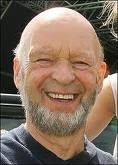
It is no coincidence that when we went into our archive of photographs of him, every one of them saw him with a big smile.
He loves what he does, he loves the feeling the festival gives to people but most of all he loves the fact that long after the last chord has been played, people are benefiting from a festival that uses its power to prove its principles.
Subscribe to:
Posts (Atom)